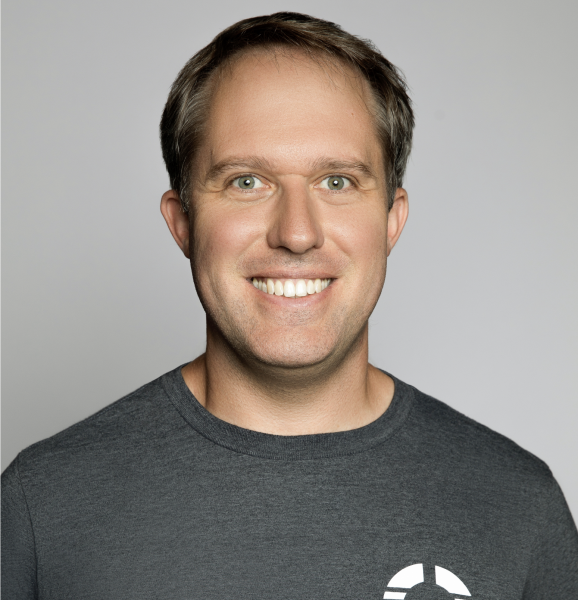
Jacob DeWitte: The Future of Tiny Nukes

This article is adapted from an interview that energy expert Mark Mills conducted with Jacob DeWitte at RealClear’s 2024 Energy Future Forum. DeWitte is the CEO and cofounder of Oklo Nuclear.
Mark Mills
Before Three Mile Island, anti-nuclear sentiment was already in full force. Thousands of people protested nuclear power plants like Seabrook in New Hampshire. They flooded construction zones, chained themselves to fences, and carried placards saying things like “Split wood, not atoms.” Here’s the bottom line: they got their wish. Today, burning wood provides twice as much energy as all the world’s nuclear plants combined. That’s a travesty, and it all started with the fierce, irrational, well-funded opposition to nuclear energy. That opposition is still around, though it's quieter now.
Let’s not forget that nuclear is the single most important energy technology developed since the invention of the internal combustion engine. It’s not going to replace combustion, but learning how to produce useful energy from nature through fission is an unparalleled discovery. Fission reactors are like airplanes—there are dozens of designs, from helicopters to jumbo jets. You can build reactors from kilowatt-scale to gigawatt-scale, using thorium or uranium, and low or high enrichment.
Your company, Oklo Nuclear, has one of the most intriguing designs out there. But before we get into that, let me ask: how many people here know what a fast breeder reactor is, why it’s important, and why your company is particularly interesting?
Jacob DeWitte
The name "Oklo" Nuclear comes from a region in Gabon, Africa, where in the 1970s, the French were buying uranium and found that it looked different from what’s typically mined. They got concerned because the only way uranium could appear that way was if it had been in a reactor. They wondered if it had somehow been used in a nefarious way, but what they discovered was incredible—a natural nuclear reactor had existed in that region a couple of billion years ago. Based on the geology, the natural enrichment of uranium at that time, and seawater flowing through the area, nuclear-powered geysers operated there for hundreds of thousands of years. It’s pretty cool, and there are probably more sites like that around the world.
We chose the name Oklo to remind people that nuclear energy is fundamentally natural. It’s one of the universe's fundamental forces. Harnessing that power was one of the greatest achievements in human history. When you split an atom, you produce 50 million times more energy than in a combustion reaction. That’s a huge leap, maybe second only to the semiconductor revolution.
What we're working on is next-generation technology, though ironically, it’s based on the very first type of reactor that ever produced usable electricity in the U.S. We’re developing liquid metal fast reactors, which use liquid sodium as a coolant. It’s a shiny, metallic fluid that’s very efficient at transferring heat. It allows us to simplify the plant, run it at high temperatures without pressure, and avoid some of the bespoke challenges that nuclear supply chains faced in the past.
Mark Mills
That’s amazing. Fast reactors operate on fast neutrons, right?
Jacob DeWitte
Exactly. Neutrons are born fast during fission. In today’s reactors, we slow them down to make the fuel last longer. But in fast reactors, we let the neutrons continue at high speed, allowing us to use the fuel far more efficiently. This gives us that potential for a million-fold improvement in energy density. Enrico Fermi saw this potential during the Manhattan Project, which is why our country and others have been developing this technology since the 1940s.
The U.S. has built more than 25 of these plants, and we’ve gained almost 500 combined reactor-years of experience. Our design builds on the legacy of successful plants like the Fast Flux Test Facility in Washington state and the Experimental Breeder Reactor-II in Idaho, which demonstrated key safety features, such as being “walk-away safe”—relying on natural physical phenomena for safety rather than human intervention. This also makes the plants more economical.
And on top of that, these reactors can recycle waste. With fast reactors and recycling, we could power the planet for 2 billion years using just the uranium and thorium reserves we already know about.
Mark Mills
It’s incredible because most people don’t realize that conventional reactors don’t fully use the uranium. Spent fuel still contains about 90% of its useful energy. You could power the United States for centuries without mining another gram of uranium, just by reprocessing the spent fuel.
Jacob DeWitte
Exactly, and that's what we're working to do—getting recycling up and running as quickly as we can.
Mark Mills
I think I’ve spoken with many of your colleagues designing the new generation of reactors. And I’ll say this: I think all of them will work, technically. The IAEA has identified around 62 distinct designs being built. It’s a fascinating diversity of design pathways, from Westinghouse’s ten-kilowatt machine for Mars, which is kind of cool—essentially a refrigerator-sized nuclear power plant! While many are clever designs, I think affordability will be an issue. Some might not be practical. Could you talk about what you're doing with these so-called small reactors?
Jacob DeWitte
Yeah, first off, what you’ve highlighted is what excites me—there are so many ways to split atoms and harness that heat. Different sizes, technology types, and coolants. What we saw, though, was an opportunity to wrap new technology around existing concepts. While the technology we're working on isn't exactly new, we’re modernizing the designs. Advances in computational capabilities allow us to do that. More importantly, we’re changing how we approach the business model.
The industry has been stuck with an old model. Typically, companies design a plant up to 80% completion, then ask customers to invest hundreds of millions of dollars to finish the design, site it, and build it. That model may have worked in the '60s and '70s, but today’s energy market is different. You now see large energy users buying power directly, signing Power Purchase Agreements. They definitely want nuclear power, but it’s hard for them to buy it. We focus on making it easy.
We design, own, operate, and site these reactors. A customer tells us where they need power, we evaluate if we can build there—our system is highly versatile. Once we have a site, we sign a PPA, build the plant, operate it, and sell power for 20 years. It makes the process much simpler.
Mark Mills
That’s interesting, especially because of the maintenance cycle. Traditional light-water reactors need to shut down every 18 months to two years for refueling. The Navy, though, has reactors that run 20 years or more.
Jacob DeWitte
Yes, and that's key from an operational perspective. If you don’t have to shut down frequently, you get more uptime, which is critical for large energy users. They want reliable, 24/7 power. Our 15-megawatt and 50-megawatt plants offer exactly that. We also found that starting small was important. Some of the really small designs—those “boutique” reactors—are interesting but don’t offer much room for market growth. We wanted to be small enough to be versatile but still scalable. The 15-megawatt size hits that sweet spot.
Mark Mills
You're targeting a big enough market to grow into, but avoiding the huge, multi-billion-dollar bets some competitors are making, right?
Jacob DeWitte
Exactly. Some projects are so large they require significant government backing, which comes with expensive strings attached. For example, Bill Gates’ TerraPower is claiming it’ll cost $4 billion to build a 345-megawatt plant. That’s comparable to large-scale projects like Vogtle in Georgia. In contrast, we’re looking at about $70 million for a 50-megawatt plant. Overall, we’ll need only a few hundred million dollars to get our first plant online, which we’re already fully capitalized for—and all without government support.
Mark Mills
So, who's pulling you into the market? Who are your first customers?
Jacob DeWitte
We’re excited about our first plant in Idaho. This will be a full commercial project, and we expect to sell power to local off-takers by 2027. After that, we’ve announced two more sites in Ohio, including a project with the Air Force. We’ve also received interest from the data center sector. Over the past three months, we’ve signed agreements totaling 650 megawatts, including 50 megawatts for Diamondback to electrify its operations in the Permian Basin. The remaining 600 megawatts is split between two customers, primarily in the data center industry.
Mark Mills
That’s great momentum! What about the regulatory side? Do you see any challenges in getting your plants licensed, especially those not on federal or military sites?
Jacob DeWitte
We feel pretty good about it. The NRC has a solid track record, but there’s room for modernization. We’ve been working with them since 2016 and have seen progress, but it’s slow. What we need to focus on is streamlining some of the outdated requirements. For instance, the NRC still requires two years of meteorological data for new sites, which made sense in the '70s, but with modern computational capabilities and datasets from organizations like NOAA, that’s no longer necessary. Congressional support could help modernize these processes across the industry.
Mark Mills
You’re absolutely right. The political landscape for nuclear seems promising, but environmental groups remain largely anti-nuclear. How are you preparing for potential pushback from those groups?
Jacob DeWitte
The opposition is still there, but I think it’s smaller now. There’s been a huge demographic shift. Younger generations—Millennials, Gen Z, and even Gen Alpha—are much more pro-nuclear. They see it as essential for addressing climate change, and this pro-nuclear sentiment has become part of the environmental movement. When California made the decision to close its two remaining nuclear plants, much of the pushback came from grassroots efforts led by younger activists. The fearmongering that used to dominate the conversation is losing ground, but we still need to stay ahead of it and combat disinformation.